
Research and evidence · Practical guide
How to do AI research with verifiable citations
Define a reproducible research question, prioritize primary sources, map claims to evidence, and deliver an AI-assisted report whose citations and limitations can be checked.
Written and reviewed by the OpenMira Product Team · Published Sep 1, 2026 · Reviewed Sep 2, 2026Direct answer
To do AI research with verifiable citations, first constrain the question by subject, time period, geography, and output. Locate primary sources, record which source supports each material claim, separate verified facts from calculations and interpretation, and review dates, scope, conflicts, and evidence gaps before delivery.
Complete process recording
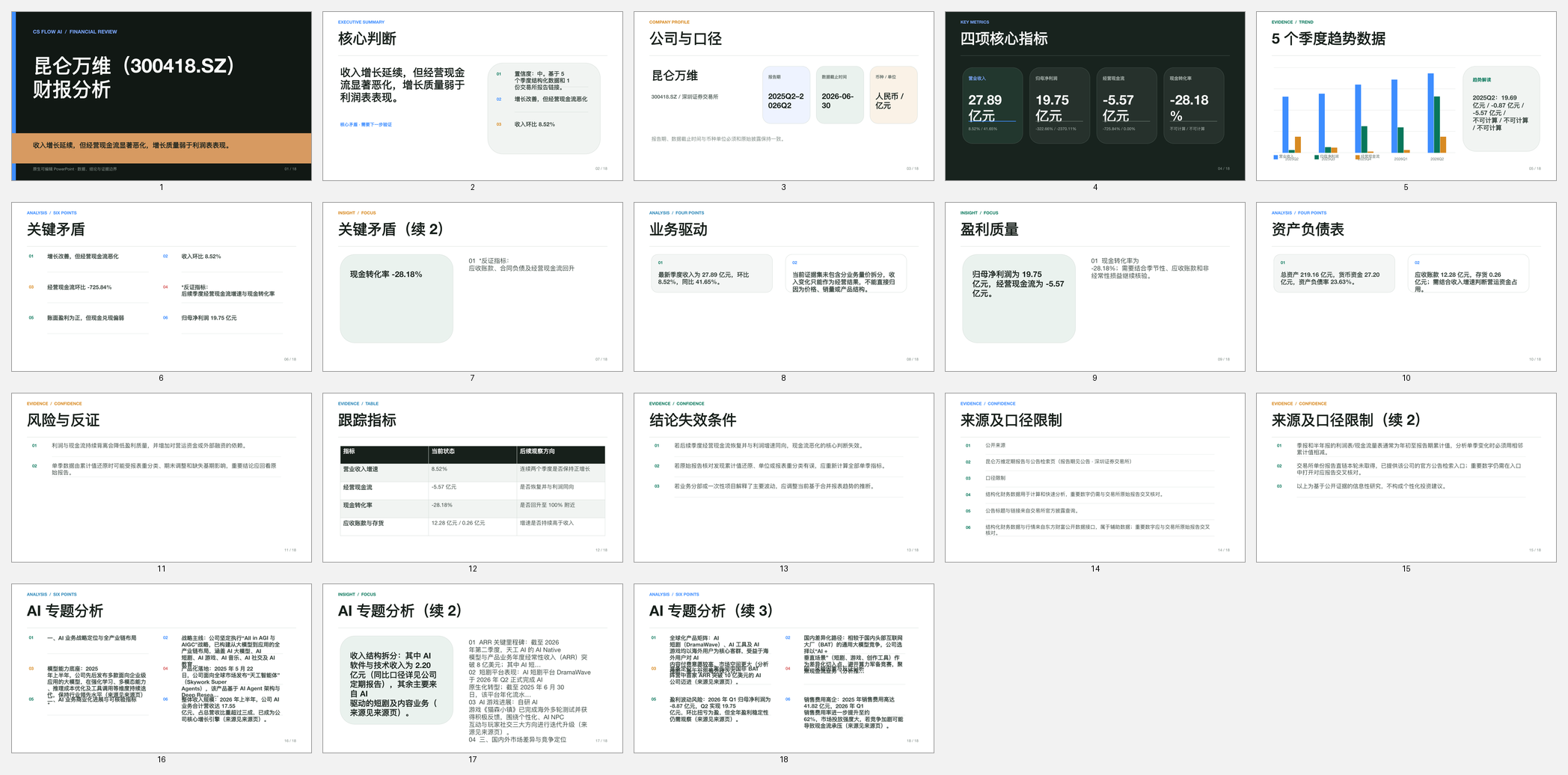
AI research assistant: question to cited, reviewable report
Watch a real CS FLOW AI task define the research scope, route the work, gather official sources, expose verification progress, and prepare a cited report for review.
Reproducible workflow
Four steps with a visible verification path
- 01
Define a reproducible question
State the subject, time period, geography, comparison group, required output, and what would count as sufficient evidence. Ambiguous terms such as latest, best, or growth must receive an explicit definition.
- 02
Build a primary-source evidence set
Use official filings, standards, regulators, product documentation, or original research records before secondary summaries. Save stable URLs, document dates, and the relevant source scope.
- 03
Map every material claim to evidence
Keep reported facts, calculations, interpretation, conflicting evidence, and missing information in separate fields. Attach the closest relevant citation instead of placing an undifferentiated source list at the end.
- 04
Verify and deliver with limitations
Open every citation, compare the claim with the source, check dates and definitions, reproduce important calculations, and state unresolved gaps or conditions that could change the conclusion.
Before delivery
Verification checklist
- The research subject, time period, geography, and definitions are explicit
- Every material factual claim has an accessible and relevant source
- Calculations show their inputs, units, and comparison periods
- Conflicting evidence, inaccessible sources, and unresolved gaps remain visible
Human responsibility
Important boundaries
- Search snippets and AI summaries can help locate evidence but should not replace the original source
- A citation does not validate an inference that the source itself does not support
- High-stakes conclusions require qualified human review and may require sources unavailable to the product
Method and sources
Primary references used to verify this guide
External links support applicable rules, boundaries, or example definitions. Product instructions are maintained by the OpenMira Product Team based on the current public version.
- NIST AI Resource CenterNational Institute of Standards and Technology
- Search FilingsU.S. Securities and Exchange Commission
- REST APICrossref
Frequently asked questions
What to confirm before starting
Should an AI research assistant use primary or secondary sources?
Use primary sources for material facts whenever they are available. Secondary sources can provide context or help discover the original record, but they should not silently replace it.
How do I check whether an AI citation is real?
Open the link, confirm the publisher and date, locate the exact supporting passage or data, and verify that the source scope matches the claim. Mark inaccessible or mismatched citations as unresolved.
How should AI-generated interpretations be presented?
Label them as analysis, show the evidence used, include material counter-evidence, and state the assumptions or conditions that would change the conclusion.
Continue exploring