
Research and finance · Practical guide
How to build verifiable AI financial report analysis
Constrain AI financial analysis with the company, reporting period, and primary disclosures while separating facts, calculations, inference, and data gaps.
Written and reviewed by the OpenMira Product Team · Published Sep 1, 2026 · Reviewed Sep 2, 2026Direct answer
Reliable AI financial analysis starts by fixing the company, ticker, and reporting period. It then uses exchange or statutory filings as primary evidence, checks revenue, profit, cash flow, and risks separately, and records the source and definition for every material figure.
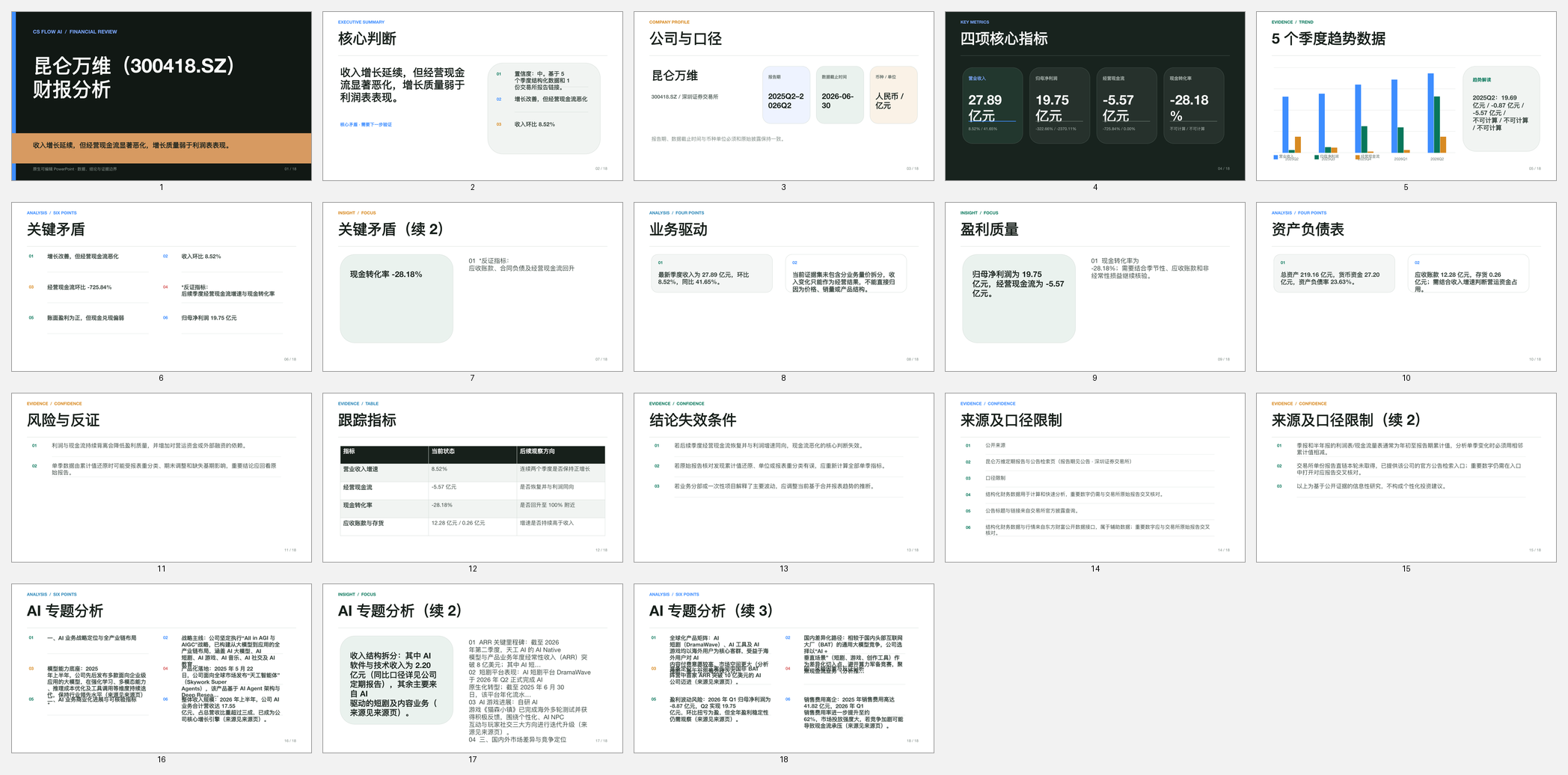
Reproducible workflow
Four steps with a visible verification path
- 01
Lock the analysis subject
Confirm the company name, ticker, reporting period, currency, and consolidated or parent-company scope.
- 02
Collect primary disclosures
Prioritize exchange filings, statutory disclosure platforms, and company announcements instead of relying on search-result summaries.
- 03
Separate facts from analysis
Record reported facts, calculations, interpretation, and missing data separately while preserving page references or original links.
- 04
Cross-check and deliver
Review year-over-year and sequential definitions, cash-flow relationships, and unusual items before producing a report, table, or presentation.
Before delivery
Verification checklist
- Company, ticker, and reporting period are consistent
- Every key figure traces back to a primary disclosure
- Period comparisons, units, and definitions are explicit
- Conclusions include risks and counter-evidence
Human responsibility
Important boundaries
- The analysis is not investment advice
- Undisclosed data cannot be presented as confirmed fact
- Different accounting definitions and restated data require separate explanation
Method and sources
Primary references used to verify this guide
External links support applicable rules, boundaries, or example definitions. Product instructions are maintained by the OpenMira Product Team based on the current public version.
Frequently asked questions
What to confirm before starting
Which documents should AI financial analysis prioritize?
Start with periodic reports, earnings materials, audit opinions, and exchange inquiries, using the reporting period and definitions in the original filing.
Can a search-result summary be used as a financial data source?
Not as final evidence. Summaries can help locate a document, but key figures must be checked in statutory disclosures or official company announcements.
How can fabricated financial figures be reduced?
Require every material number to include its source, reporting period, unit, and page reference, and label anything that cannot be verified as a data gap.
Continue exploring