
Learning and education · Practical guide
How to use AI homework grading responsibly
Learn when AI grading is appropriate, how to review answers in four steps, what to verify, and where teacher judgment remains essential.
Written and reviewed by the OpenMira Product Team · Published Sep 1, 2026 · Reviewed Sep 2, 2026Direct answer
AI homework grading works best when it first matches each question with the student's answer, then returns correctness, error causes, and correction guidance item by item. Objective and structured-response work is more suitable for initial AI review; open-ended work and final evaluation require teacher oversight.
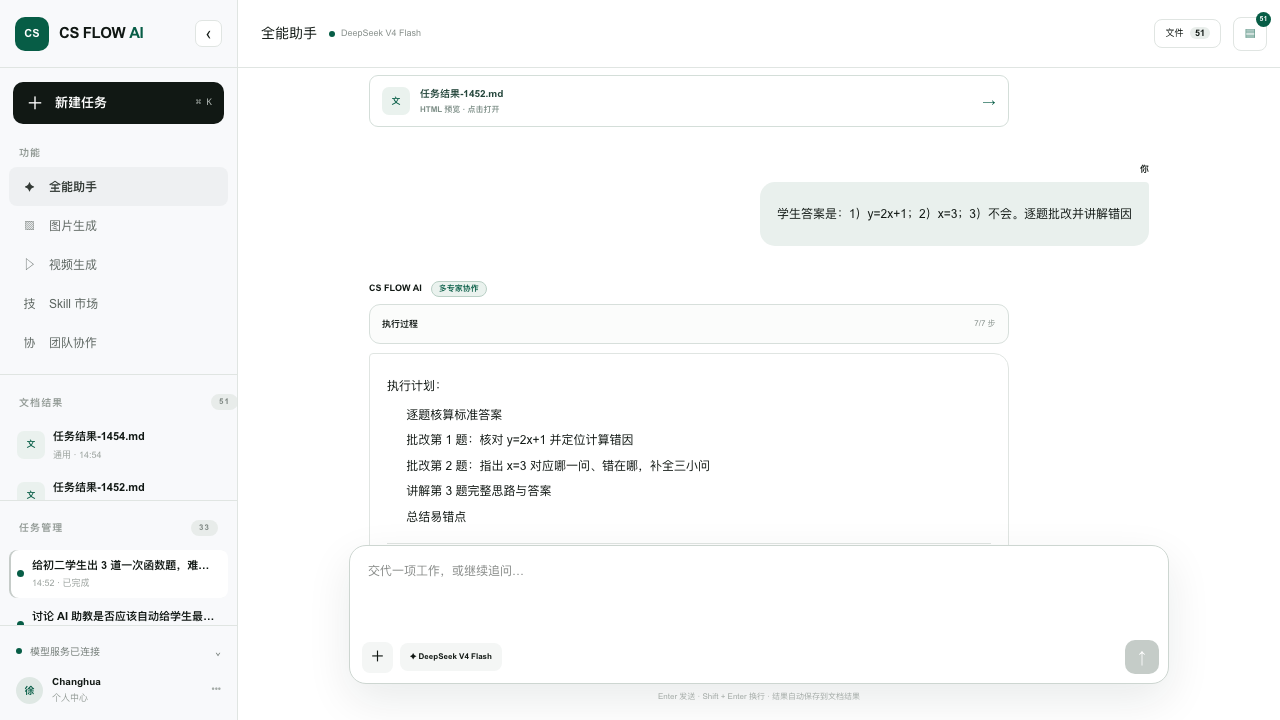
Reproducible workflow
Four steps with a visible verification path
- 01
Prepare readable source material
Capture complete questions and answers on a flat, evenly lit page, then remove names, school details, and other information that is not needed for grading.
- 02
Define the review standard
Provide the grade level, subject, question type, and whether the task needs correctness, error explanations, scoring, or correction guidance.
- 03
Match every question and answer
Verify question numbers, prompts, and answers before grading. Mark unclear handwriting as needing confirmation instead of guessing.
- 04
Review before giving feedback
Check calculations, rubric use, and whether the explanation supports the learning objective before using the result for correction or practice.
Before delivery
Verification checklist
- Questions and answers match item by item
- Formulas, units, and calculations are correct
- Uncertain content is explicitly marked rather than invented
- Feedback includes the error cause and a next action
Human responsibility
Important boundaries
- Open-ended work such as essays or art should not receive a final evaluation from AI alone
- Teachers remain responsible for grades, placement, and other important educational decisions
- Remove unnecessary personal and sensitive information before uploading
Method and sources
Primary references used to verify this guide
External links support applicable rules, boundaries, or example definitions. Product instructions are maintained by the OpenMira Product Team based on the current public version.
- Guidelines for Teachers Using Generative AI (First Edition)Shanghai Municipal Education Commission
- Personal Information Protection Law of the People's Republic of ChinaNational People's Congress of China
Frequently asked questions
What to confirm before starting
Can AI assign a student's final grade?
AI is better used for initial review and feedback. A teacher should combine the rubric, learning objectives, and direct observation to make the final evaluation.
What should be checked before grading from a photo?
Make sure the full question and answer are readable, and remove names, student IDs, school details, and other personal information that is not needed.
What if handwriting cannot be recognized reliably?
Request a clearer image or a typed answer. An uncertain OCR result must not be treated as the student's actual answer.
Continue exploring